
Ad Sizes For 2026: A Short Guide For Paid Campaigns
One-minute summary
Paid campaigns launched with only one or two image shapes do not display correctly across every platform. A missing shape for a given placement weakens delivery and raises cost per result, and for fashion, jewellery and beauty brands the same gap shows up as a visible loss of polish. Meta needs at a minimum a Feed vertical (1440 × 1800) and a Stories and Reels vertical (1080 × 1920) with an optional Feed square (1440 × 1440). Google's Performance Max needs a landscape (1200 × 628) and a square (1200 × 1200), with a portrait (960 × 1200) recommended. Pinterest performs best with a standard 2:3 pin (1000 × 1500) and treats 9:16 (1080 × 1920) as its full-screen format. Complete asset coverage belongs in the campaign brief, set at the planning stage rather than fixed after a campaign has already run underperforming.
A creative brand devotes weeks to shooting a complete collection, then entrusts the approved assets to the paid media team to begin building campaigns across the major platforms. Each platform has its own specifications according to the placements it covers. Preserving a brand's intentionality once a campaign goes live depends on the wider team understanding why each shape matters, which is why the teams involved must communicate clearly from the brief stage, to ensure the brand's visuals follow its intention and the platforms' best practices.
What Asset Coverage Does To Delivery
Supplying the correct file for each shape a platform specifications is usually treated as a design courtesy. Each platform ranks the available assets depending on the placements where they will show. Leave a shape out, and the platform either declines to serve there, forces a crop to make an ill-fitting file work, or simply shows the shape it has less often. A square image forced into a 9:16 slot leaves bars on either side or loses the edges of the shot. A tall pin cropped down to a square tile loses whatever sat outside the frame. None of this is dramatic on its own, but delivery systems read it as a weaker signal, and weaker signals tend to cost more to overcome. The effect on customer sentiment can be even greater, which we’ll explore in the next chapter.
The shapes that matter most differ by platform, and the difference is worth knowing before a paid asset request is briefed.
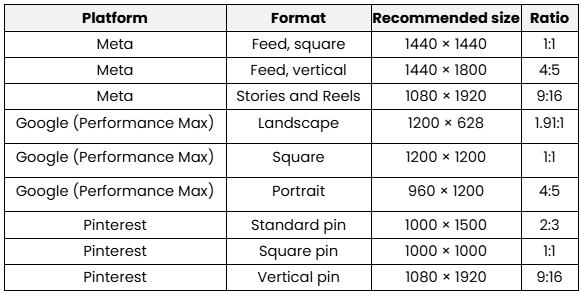
Table 1: Recommended sizes per platform
Meta's own ads guide has pushed feed exports to 1440 pixels rather than the older 1080-pixel minimum, since anything lower can look soft on current phone screens. Google separates what is required from what is merely recommended in its Performance Max specifications: landscape and square images are required, and the portrait shape is optional but still worth supplying, since a campaign without it simply has less to work with in placements that favour it. Pinterest is the most decisive of the three. Its own product specs treat 2:3 as the standard and 9:16 as the format built for full-screen mobile placements, and a square image, while accepted, is the shape Pinterest itself describes as using the least of the available space.
What Incomplete Coverage Costs A Creative Brand Specifically
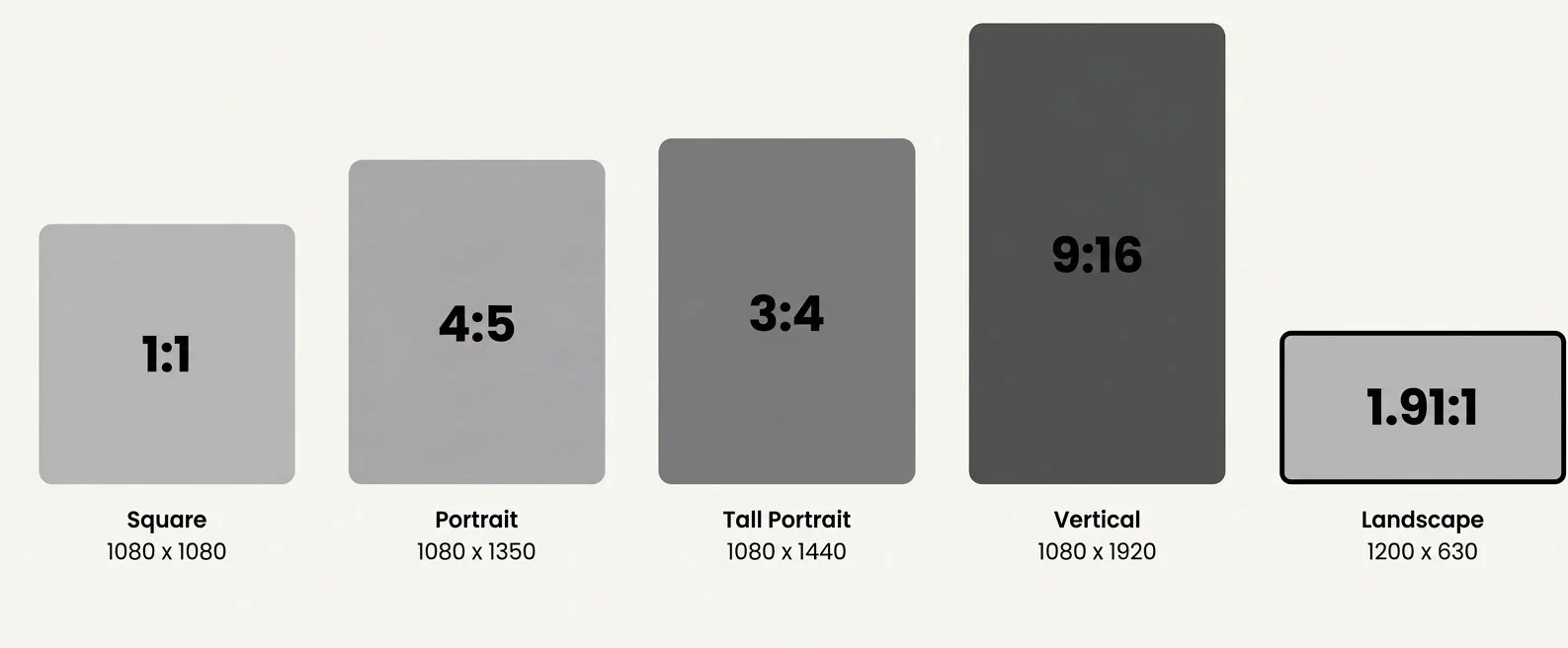
Main formats for images/videos across platforms
A cropped or padded ad is a delivery problem and a brand problem at once, and the two compound each other in campaigns for fashion, jewellery and beauty. A garment cropped at the shoulder in a Google landscape banner, a ring cut off at the setting in a Pinterest pin, a face pushed to the edge of a Meta Reels frame: none of these read as a technical limitation to the person scrolling past it. Each reads as carelessness, in a category where the entire premise is that nothing was left to chance. The brand pays twice in these cases: once in the weaker delivery the platform hands back, and once in the impression left on the new customers you’ve worked hard to acquire.
This is the same quiet pattern behind how Meta's automated creative tools already adjust approved work without asking first, skewing brand assets, and it shows up just as easily on Google's side. When a required shape is missing from an asset group, Performance Max will auto-generate a replacement from whatever it has, cropped, stretched or reassembled, rather than leave the slot empty.
Building a full asset set for every shape a campaign might need is more production work up front, and it is tempting to treat one or two well-shot images as good enough and let each platform's own automation handle the rest. That is efficient in the way the broader question of where to draw lines on AI tools in luxury marketing is efficient: it saves time today at the cost of control the brand will want back the moment something looks wrong.
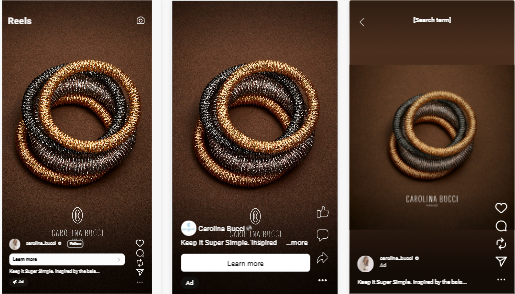
The same shot across three Meta placements. Feed and Explore keep the ring inside the frame it was composed for. Reels, without its own vertical crop, pushes in tight and cuts the negative space around it.
Where This Belongs
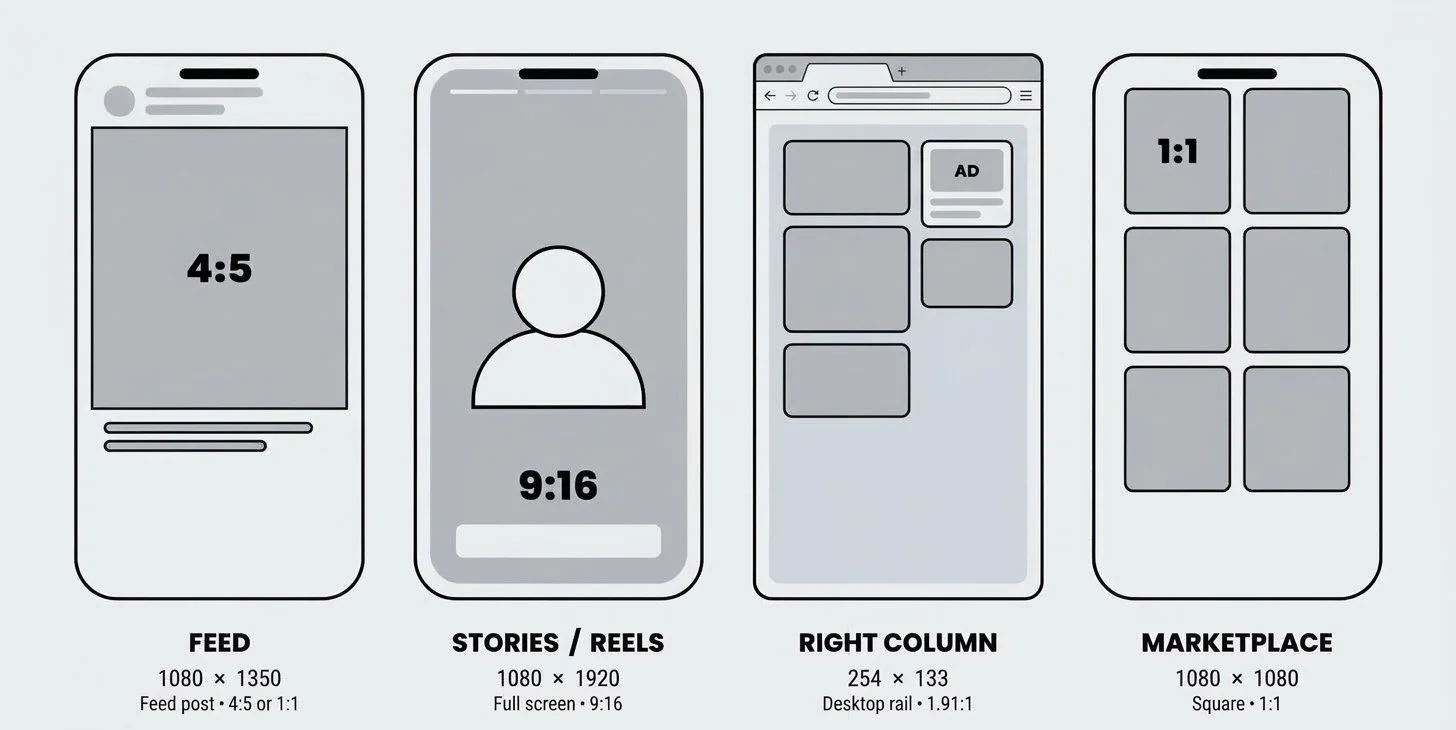
How images look according to their sizes on different placements
Asset requirements per platform and placement sit best in the campaign brief itself, set at the planning stage rather than fixed after a campaign has already run underperforming. The shoot then produces what the buy actually needs across every channel it will run on, rather than one hero image stretched to cover shapes it was never composed for.
Every platform reads discipline the same way a client does, as a pattern of small things done correctly. A downloadable template for briefing this exactly, broken down by platform, content type and card count, is available here. For guidance on getting your paid media strategy right from the brief stage, book a time at foltaconsulting.com/book-an-appointment.
